
Meet the Kumorion team: Q&A with Jaroslav Uljanovs, Head of AI R&D
From nuclear fusion to computer vision, Jaroslav has built his career around solving complex technical challenges. Now Head of AI R&D at Kumorion, he plays a key role in developing our sovereign AI platform.
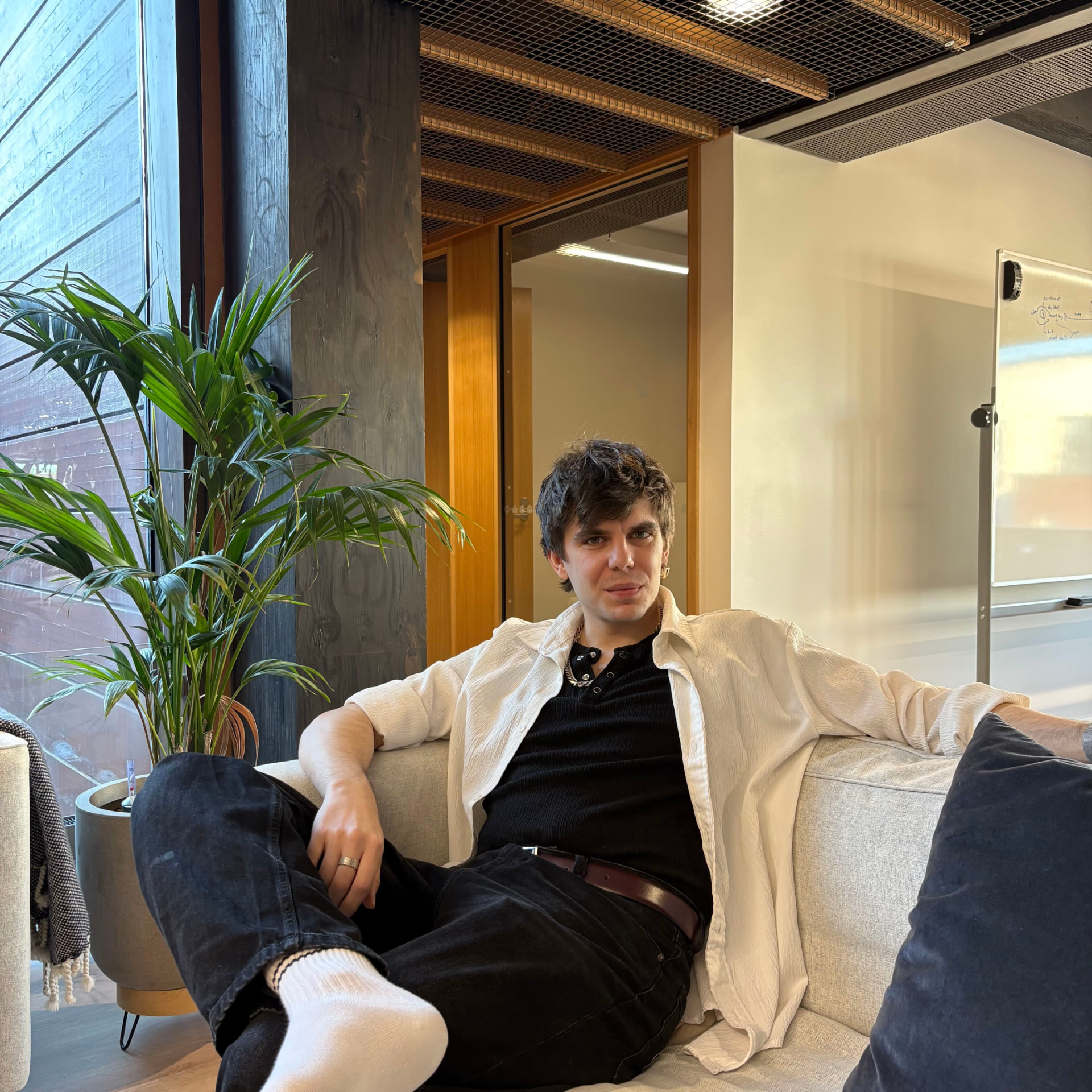
Your background is in physics, so how did you end up working with the cloud?
I studied at the University of York and wrote my master’s thesis on using machine learning to predict disruptions inside a massive spherical tokamak reactor (MAST). Later I moved to Finland for a PhD position at Aalto University, in collaboration with Oxford University. My research involved the JET fusion reactor in Oxfordshire, which at the time was the world’s largest operating tokamak fusion reactor.
I saw that AI could play a much larger role in fusion reactors, such as by controlling plasma distributions. But many of the professors I worked with believed these problems could be solved through first-principles physics. I was also seeing significant differences between simulations and actual experiments, so I became a little disillusioned with the approaches at the time. That was when I decided to move into the private sector to pursue AI-enabled technologies.
Where did this move take you before joining Kumorion?
My first data-science work was quite varied. One project involved forecasting demand and optimizing delivery routes for Interflora. I then joined a drone technology company to build and direct its AI function. We were essentially using computer vision to detect vegetation and powerline problems across California’s electricity network, with drones and helicopters capturing images for remote AI analysis. I went from being an AI developer to become Director of AI.
I later gained experience across DevOps, open-source models, RAG/GraphRAG applications, GPUs and model optimization while building the AI team and platform at ConfidentialMind. This created a natural bridge into the work I’m doing at Kumorion. I was initially focused on Nokia, as I wanted a taste of consulting for a major client. Now my role has shifted towards developing our own sovereign AI platform.
Please tell us more about that initiative.
Rather than having to send information to an external AI provider, Kumorion’s idea is that companies should be able to control their own AI models, data and infrastructure.
We use open-weight models that can be deployed on the customer’s own premises. The platform runs on Kubernetes and can support models across multiple GPUs, so administrators can give developers API access and monitor how models are used.
Kumorion also has its own cloud platform, which gives us an interesting advantage. Instead of treating the AI layer and cloud infrastructure as two separate things, we can bring them together as a complete solution. Our core idea is to optimize deployments on prosumer level GPUs. The aim is to decrease the initial hardware investment for a given level of intelligence and thus increase our potential market.
What do you personally find most interesting about this work?
I already spend a lot of my free time following developments in open-source AI and ML research, so there is a strong overlap with my own interests. I enjoy figuring out how to run models efficiently on the infrastructure available. This can mean deploying a model across multiple GPUs and servers, or even on my own local machine. A multitude of factors are involved, from modifying GPU kernels to optimizing how memory is used to boost the request speed.
How much freedom do you have to develop new ideas at Kumorion?
Quite a lot. The sovereign AI platform itself is a good example. Before we started developing it, I had been experimenting at home with a small NVIDIA Jetson Orin device and had managed to create my own local LLM environment. I brought an early prototype into Kumorion to demonstrate what was possible. As a result, this has grown into a potential Business Finland project.
That kind of initiative is encouraged here. If you have an idea and can show that it has potential, you have an opportunity to pursue it. We have a five-person machine-learning team, so it’s small enough that you can have a real influence on what we are building.
How does working at Kumorion compare with your previous roles?
I spent many years in startup environments, where the line between work and free time can get blurry. But here the work-life balance is very good. Kumorion emphasizes employee benefits and group activities.
We’ve grown since I joined, but it still feels small enough that you know most of the people. There’s an international atmosphere in the office and my colleagues’ expertise in their respective areas is unparalleled. I recently discovered that one of the DevOps professionals in our platform team had worked on an AMD AI inference platform. This is exactly the kind of experience that should help to propel our product forward and beyond the prior state of the art.